


PRODUCTS.02
Green Matcha
Green Latte
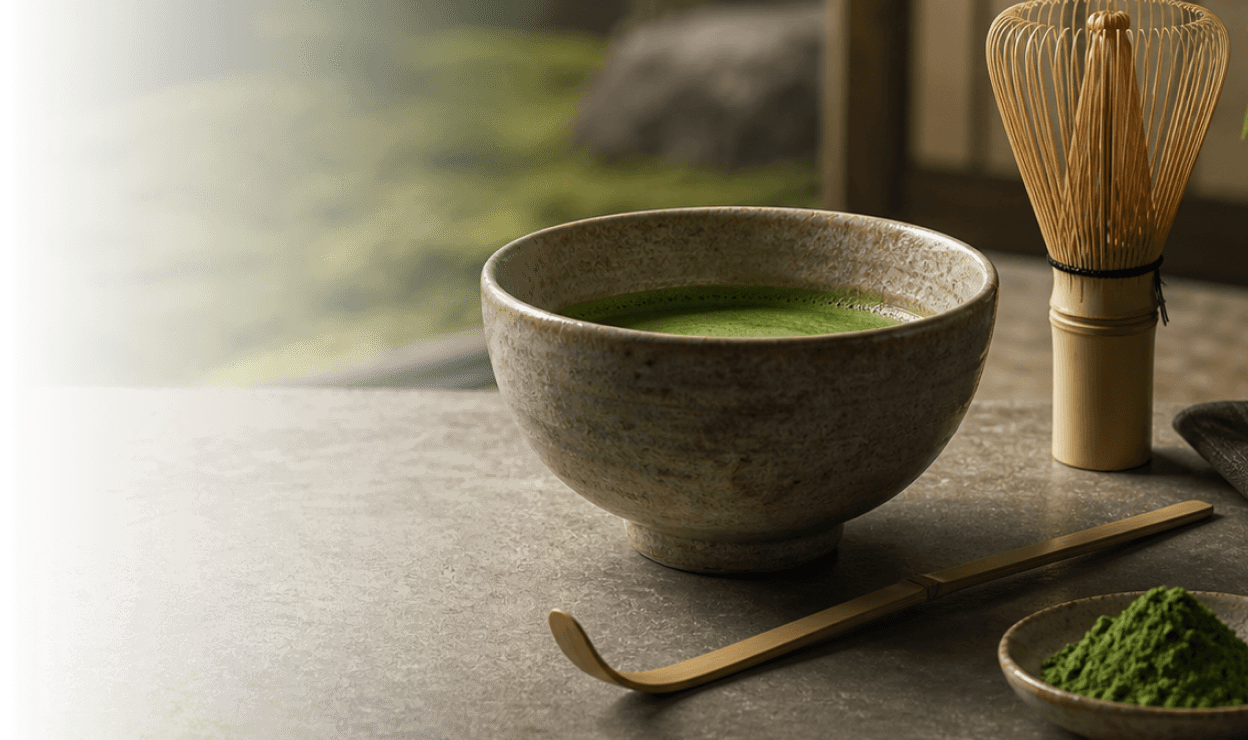
If "Blue Matcha"—derived from butterfly pea petals—symbolizes the vibrant blue sky of hope in Thailand, then "Omi Matcha" embodies the serene, tranquil spirit of Japanese tea culture.
Cultivated amidst the historic tea landscapes of Shiga, Omi Matcha has been meticulously crafted for use in cafes, desserts, tea ceremonies, and the development of premium menu offerings.
-
 JAPAN
-
 Green tea leaves
(Tencha) -
 Umami & Bitterness
-
 Superfood
-
 Theanine 300mg Improve sleep quality
Catechin 150mg Decrease in visceral fat
ABOUT GREEN MATCHA
1,200-Year Tea Memory
Omi tea is rooted in one of Japan's oldest tea landscapes. In Shiga, the story of tea is not only a product story, but a cultural memory connected to temples, mountain fields, old roads, and the beginning of Japanese tea culture.
A quieter name in matcha. A deeper origin story. Omi Matcha is for buyers who look beyond the famous names and need heritage, depth, and a premium Japanese story.
Uji, Nishio, and Yame Matchas are very famous among Japanese Matcha brands, but we carry local varieties such as Omi Matcha and Mino Matcha.
BRANDS HANDLED 01
Omi Matcha
The History Of Omi
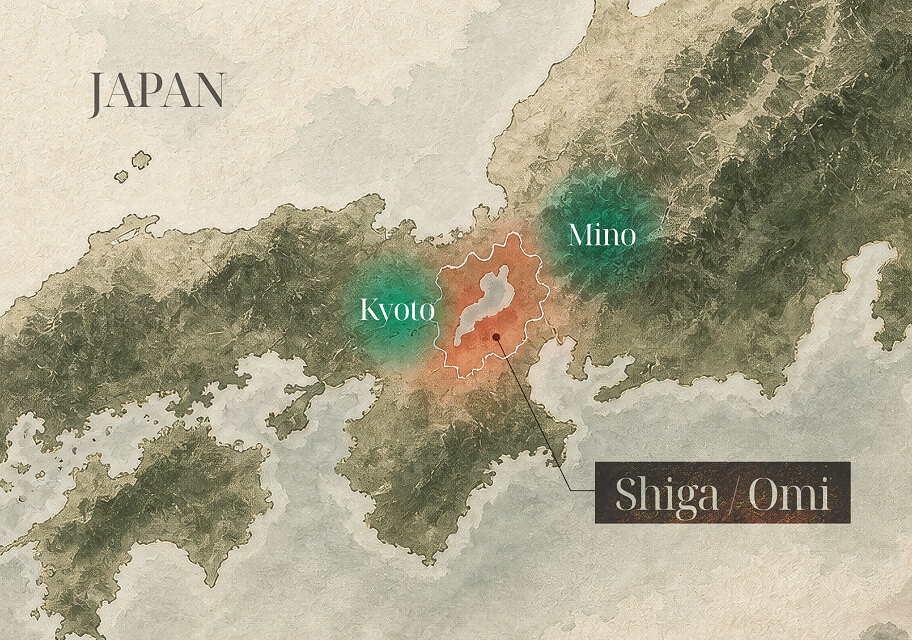
Omi is a region that has developed as an important center of politics, economy, and culture, centered around Lake Biwa. The name "Omi" is derived from *Awaumi* (or *Omi*)—meaning "freshwater sea"—which refers to the large freshwater lake located near the capital (Kyoto).
During the Sengoku period (approximately 500 years ago), many castles were built in Omi area,
making it a strategic stronghold. Azuchi Castle was constructed in 1576, and Hikone Castle in 1604.
In the Meiji (1871), Omi became Shiga Prefecture. Omi is a region that has developed as an
important center of Japanese politics, economy, and culture throughout its long history, from the
castle culture of the Sengoku period to commerce and transportation in the Edo period and
modernization after the Meiji.
Koka City, Shiga Prefecture
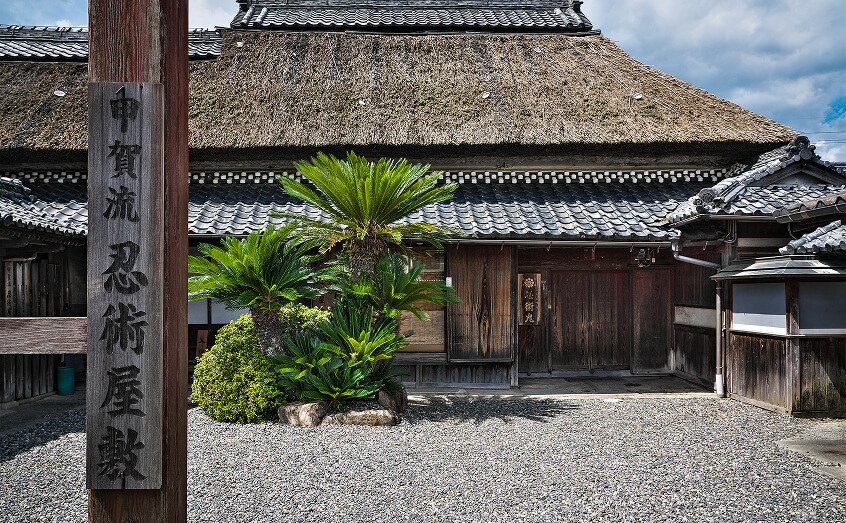
Koka City in Shiga Prefecture is located in the southeastern part of Shiga Prefecture. Koka is a
samurai village known for its "Koka Ninja." It is said that Ninja would normally engage in farming
or peddling to gather information in various regions, but when given orders, they would go to the
battlefield or its rear and engage in covert operations. Medicine was a major part of Ninjutsu,
and even today there are many pharmaceutical companies in Koka City.
Tsuchiyama-cho in Koka City was the 49th post town on the Tokaido, and is famous for Tsuchiyama
tea (sencha).
The Tsuchiyama region is characterized by gently rolling hills, blessed with long hours of sunshine
and pure water, creating an ideal environment for cultivating tea leaves with a rich flavor and
aroma. The cultivation area is approximately 160 to 200 hectares, and the annual production is
about 550 tons.
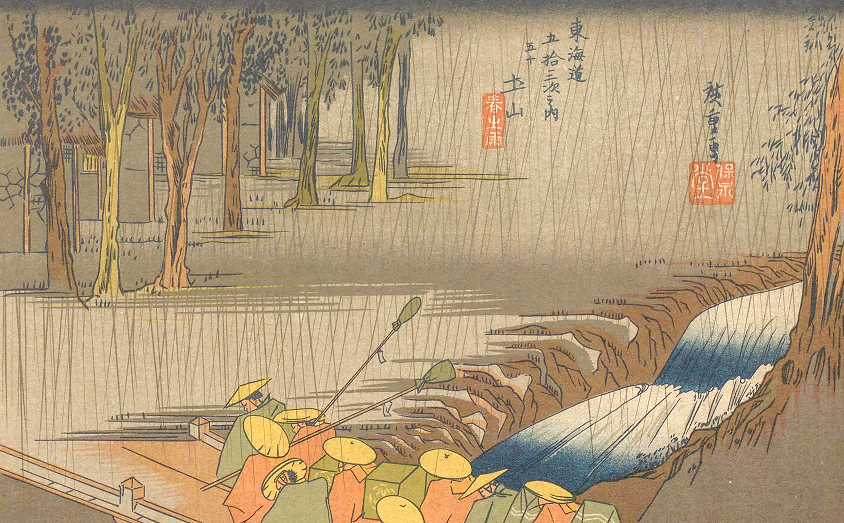
Tsuchiyama Tea Cultivation
Tsuchiyama tea is grown in the pure water and fertile soil of the upper reaches of the Yasugawa
River, resulting in a refined and mellow taste. Its thick leaves contribute to a rich flavor and
aroma, making it a delicious beverage. Furthermore, the cultivation of "kabusecha," where tea
leaves are covered before harvesting to limit sunlight, is also thriving, resulting in a mellow
flavor with enhanced umami and reduced bitterness.
In addition, the cultivation of "Tencha" (powdered green tea) is progressing, and it is being sold
as "Uji Matcha."
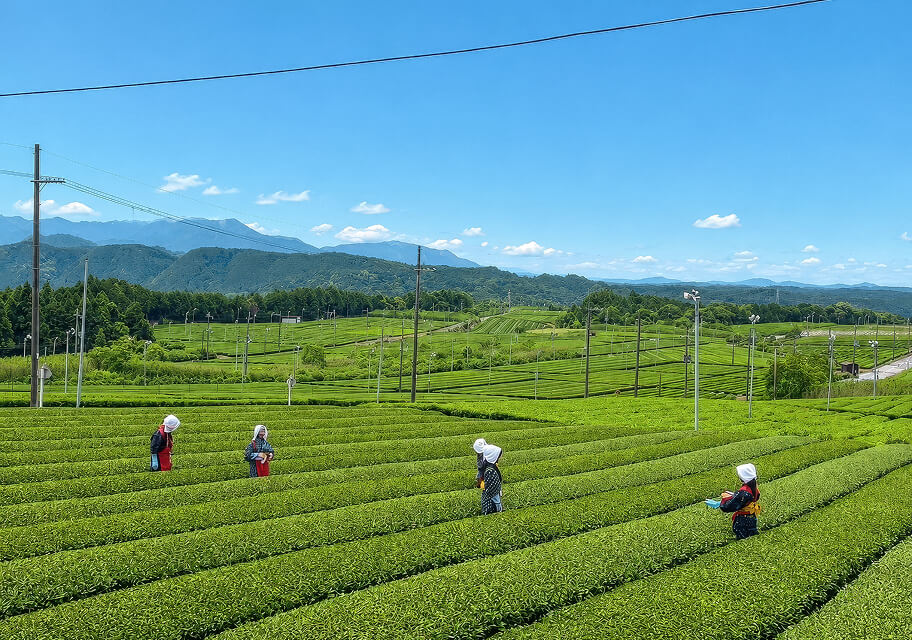
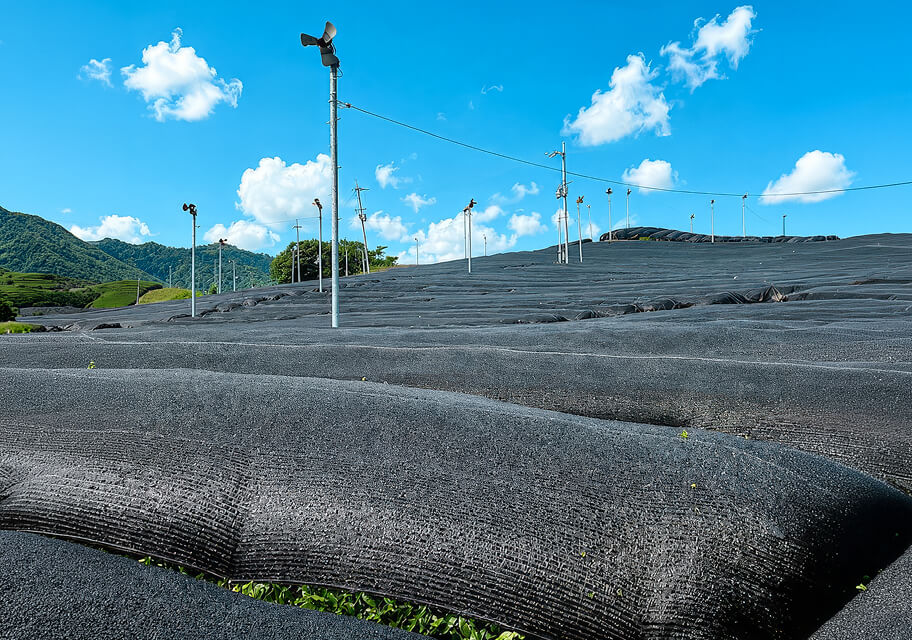
Cultivation Of Tencha (Powdered Green Tea Leaves) For Omi Matcha
Tencha is characterized by its manufacturing method, which involves cultivating tea leaves under shade to concentrate the umami components, and then drying them without rolling. This reduces bitterness and enhances sweetness and umami.
Since 2025, we have introduced a process to powderize Tencha (powdered green tea) , establishing an integrated production system from tea leaves to powder, and have begun selling it under the Omi Matcha brand . We have established thorough quality control, meticulously managing temperature and humidity in the production process and refrigerated warehouses, so that the product is produced and shipped in the best possible condition.
-
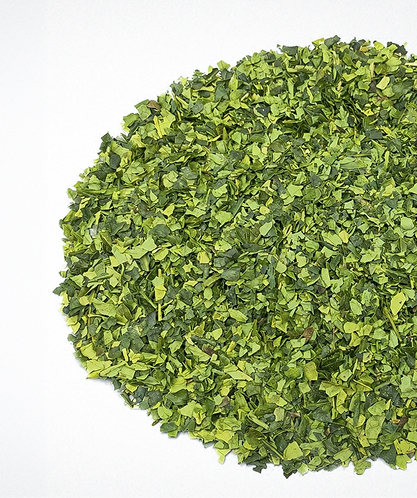
Omi Tencha -
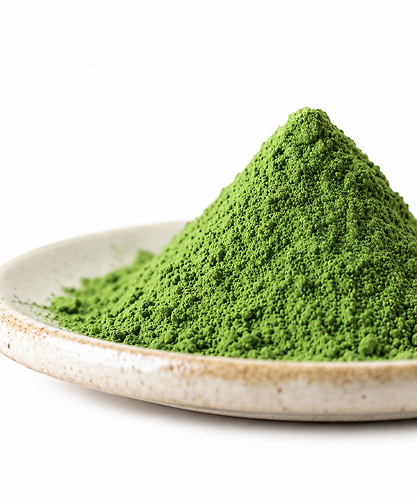
Omi Matcha -
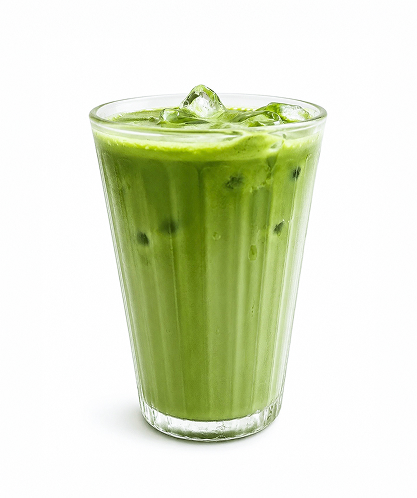
Omi Matcha Latte -
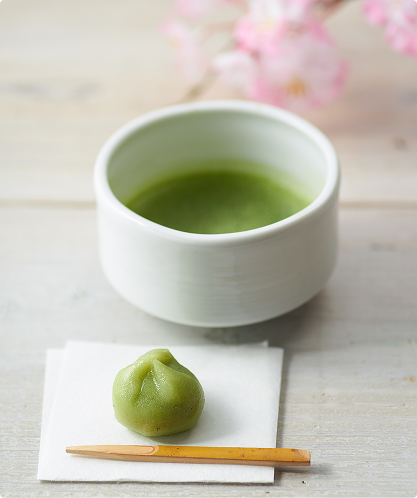
Omi Matcha and Japanese sweets
BRANDS HANDLED 02
Mino Matcha
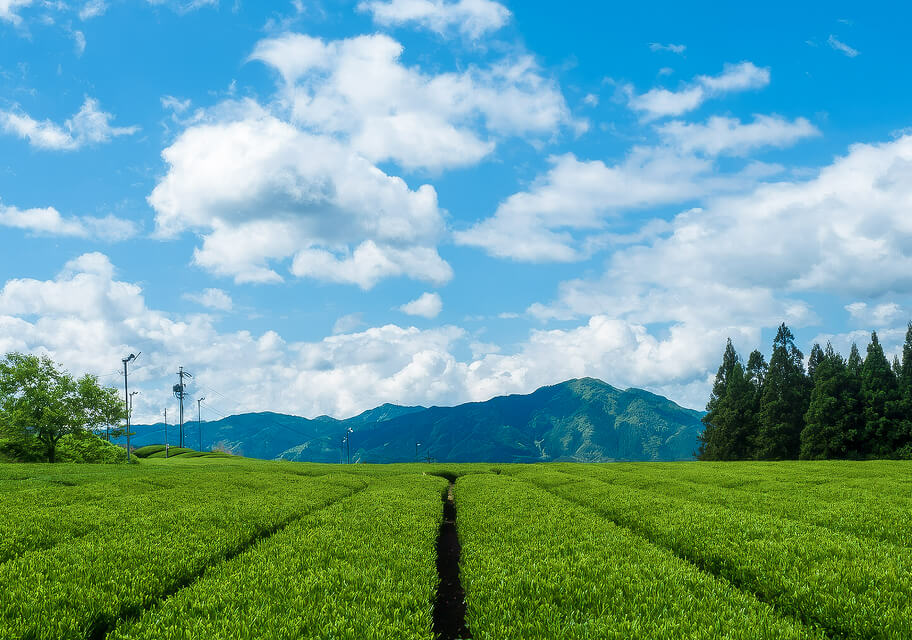
Mino (Gifu Prefecture) is located next to Omi (Shiga Prefecture).
It is said that "whoever controls Mino controls the whole country," highlighting its historical
importance as a battleground.
Mino is nestled among the 3,000-meter-high mountains of the Northern and Central Alps, from which the Ibi, Nagara, and Kiso Rivers flow majestically. "Mino tea" is nurtured in this rich natural environment of Mino and Hida. While this beautiful nature can sometimes be harsh, it is this very harshness that brings out the power of the tea, creating its rich aroma and flavor.
We also carry Mino Matcha, made using Tencha (tea leaves) grown in this naturally rich Mino region.
BRANDS HANDLED 03
Kabusecha And Moga-Cha Powder
Due to rising matcha prices, Kabusecha powder and Mogacha powder can be used as a substitute.
We also offer Kabusecha and Moga-cha powder (a type of powdered green tea for commercial use).
Mogacha is a form of Tencha intended for food processing; it is made by steaming tea leaves and
drying them without the rolling process. It is primarily used in commercial applications, as it is
cost-effective and well-suited for processing.
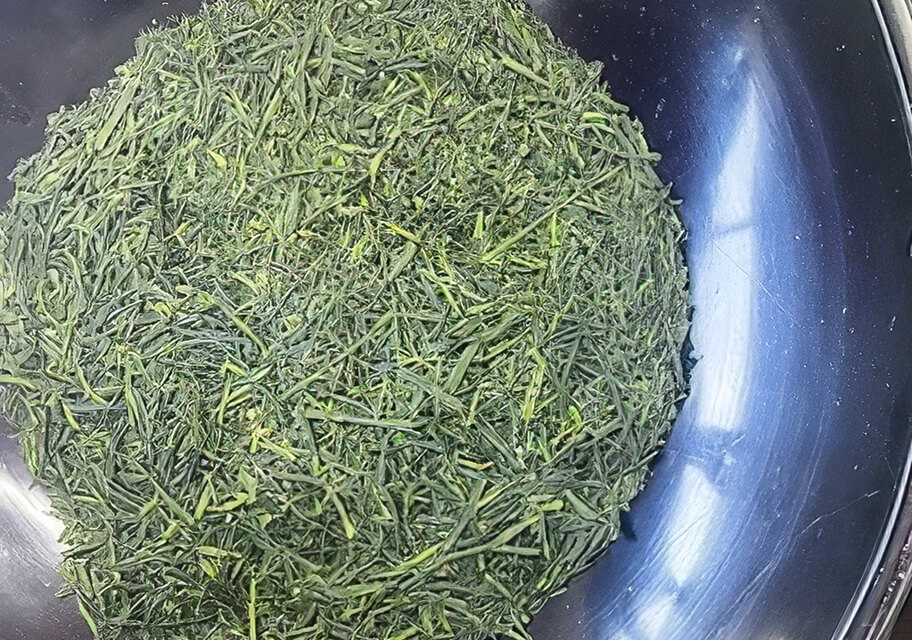
The Difference Between Matcha And Kabusecha
Matcha is made from powdered Tencha, while Kabusecha powder is made from Kabusecha.
Kabusecha is a type of green tea that is somewhere between sencha and gyokuro, and is grown using
cover cultivation, just like Gyokuro.
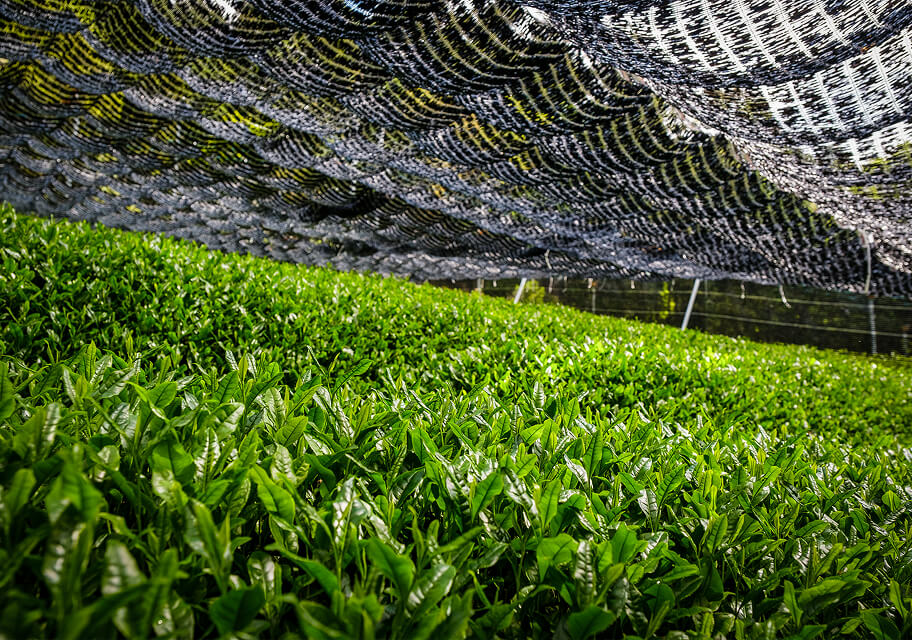
1.Cover Cultivation (Black Netting) Period
Basic period for covering the tea with the black net is at least 30 days for first-grade Matcha tea and at least 14 days for first-grade Kabusecha tea.
Shade Purpose
Cut UV. New leaves becomes light green and soft. Theanin ingredients increased. Not bitter taste, Good flavor, Umami.
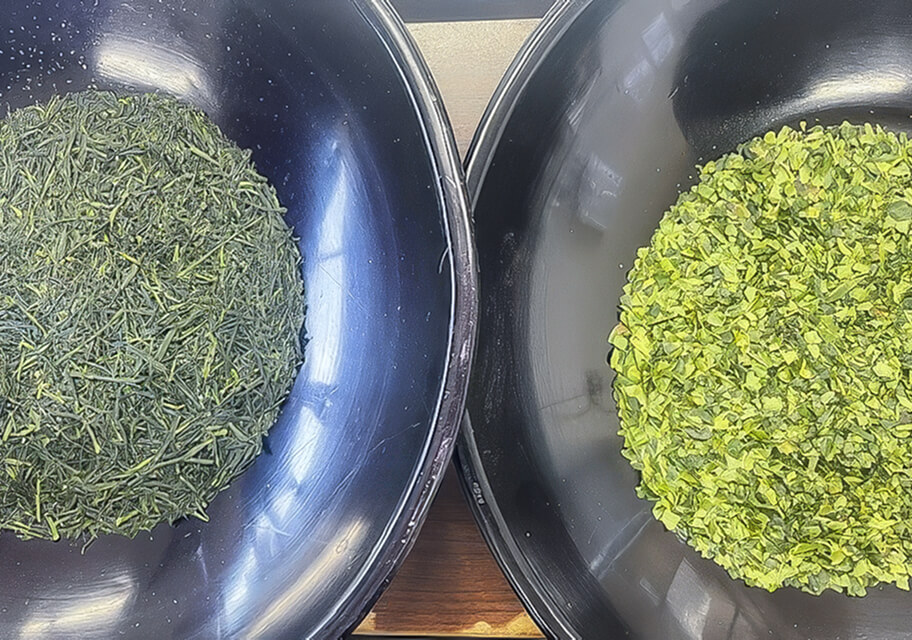
2.Characteristics Of Matcha And Kabusecha
Tencha, the raw material for Matcha, is made from harvested tea leaves that are dried.
Kabusecha is a type of green tea made by steaming the harvested tea leaves and stems, rolling
them, drying them, and finally shaping them into a pin-shape.
Even if you brew tencha in a teapot, it doesn't have much flavor, but if you brew kabusecha in a
teapot, it has a rich sweetness. This is because kabusecha is made by breaking down the fibers
during the manufacturing process, making it easier to extract.
Tencha for matcha is because it is not rolled during the manufacturing process, so it has a lighter specific gravity and is more dispersible when powdered. When kabusecha is powdered, it becomes less dispersible.
3.The Process Of Making Matcha And Kabusecha
This is the manufacturing process for matcha and Kabusecha powder. Apart from the selection of 03 and 05, it is the same.
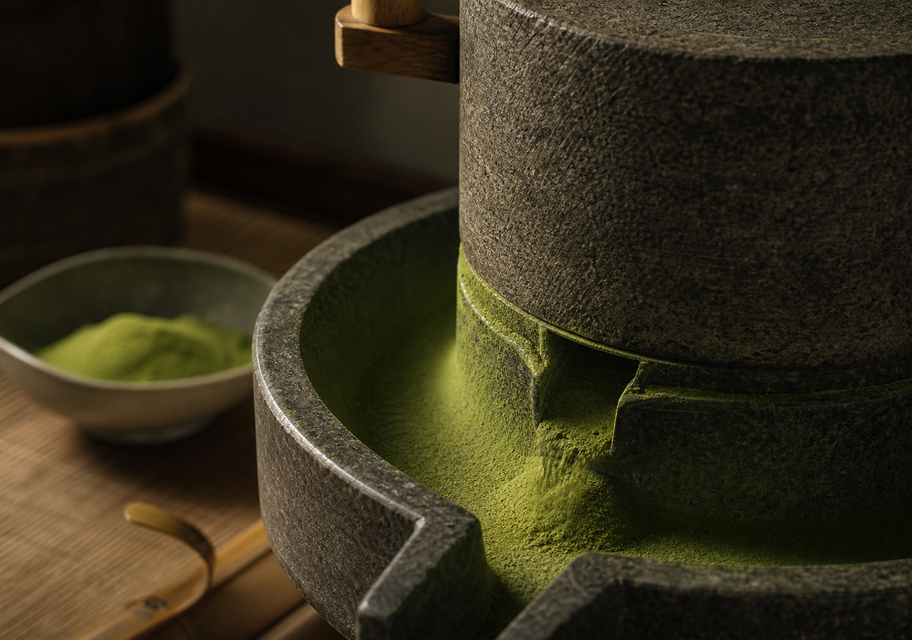
Matcha Manufacturing Process
- 01 Purchase Of Raw Materials (Tencha)
- 02 Cutting
- 03 Wind Sorting sorting out stems and hard leaves
- 04 Drying
- 05 Electrical Sorting sorting stems and veins
- 06 Blend
- 07 Grinding using machine mill or stone mill
- 08 Sifting Removing coarse tea that cannot be ground
- 09 Products
Kabusecha Powder Manufacturing Process
- 01 Purchase Raw Materials (Crude Tea)
- 02 Cutting
- 03 Wind Sorting sorting light leaves
- 04 Drying
- 05 Color Sorting stems sorting
- 06 Blend If you are drinking from a teapot, this is the end
- 07 Grinding using machine mill or stone mill
- 08 Sifting Removing coarse tea that cannot be ground
- 09 Products
-
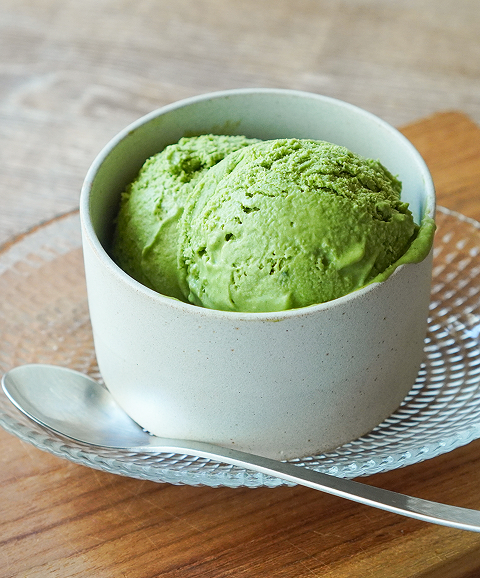
Matcha ice -
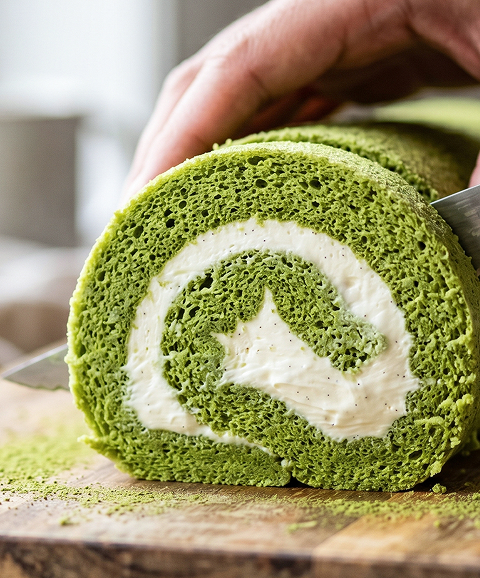
Matcha swissroll -

Matcha donut -
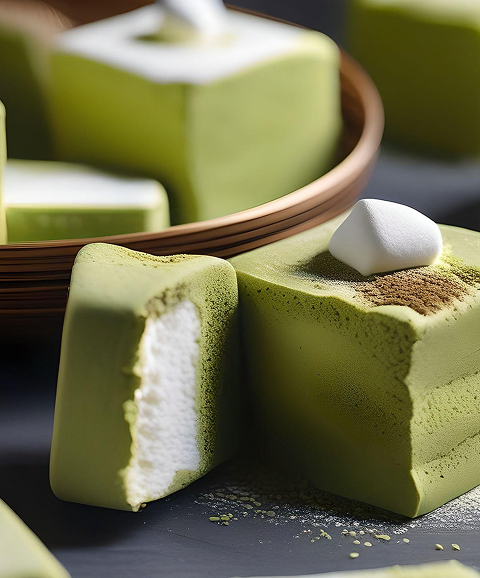
Matcha marshmallow -
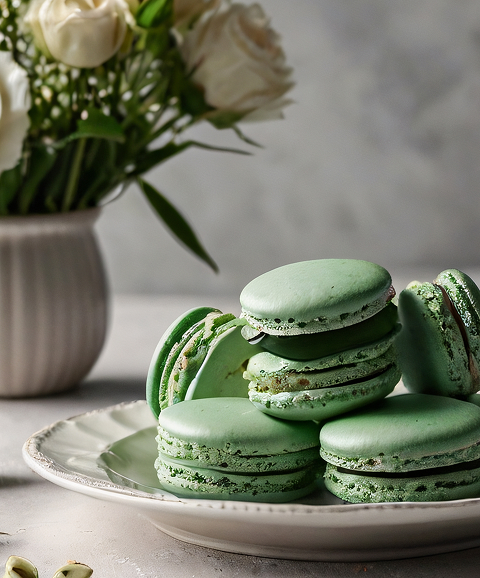
Matcha macaron -
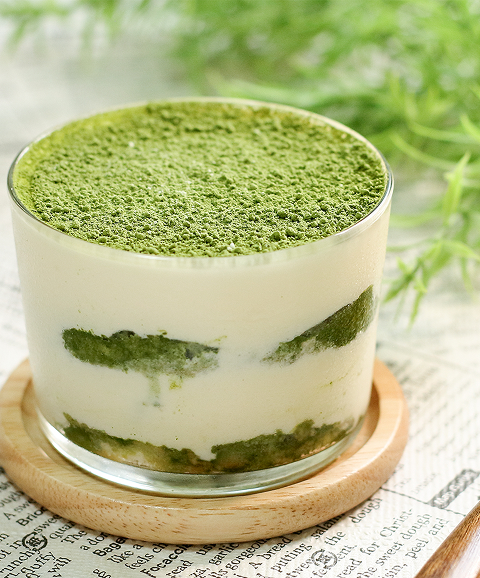
Matcha tiramisu -
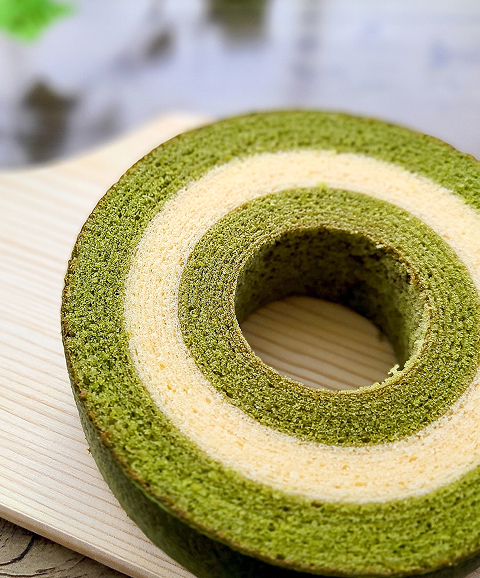
Matcha baumukuchen -
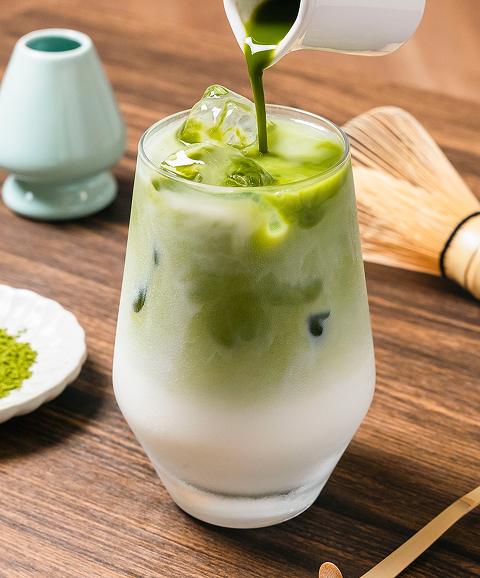
Matcha latte
COMPARE ITEMS
Choose The Right Green Format By Application
Not every project needs the same matcha powder. Omi Matcha is the premium tencha-based option for traditional tea, premium lattes, desserts, and fine dining. For blended menus, snacks, OEM trials, or cost-sensitive applications, kabuse-cha powder and moga-cha powder can be reviewed separately. The right selection depends on target use, color tone, aroma, umami, particle size, document requirements, volume, and target price range.
| Drying | Matcha | Local Matcha | Kabuse | Moga |
|---|---|---|---|---|
| Tea tree bland (example) |
|
|
|
|
| Bland | Nishio, Uji, Yame, Shizuoka | Omi, Mino, Mie, Kagoshima, others | Mie, Kagoshima, others | Kagoshima, Shizuoka, others |
| Leaves name | Ceremonial grade A B | Latte etc B | Latte, Snack etc B | Latte, Snack, Beverage etc B |
| Leaves name | Tencha | Tencha | Kabuse cha | Moga cha |
| Cultivation * | Shade 30days | Shade 30days | Shade 10days | No Shade |
| Materials | Only light green leaves | Only light green leaves | Leaves and stems | Leaves and stems |
| Color | Light green | Light green | Light green | Green |
| Process | Steam
|
Steam
|
Steam
|
Steam
|
* It varies by region.
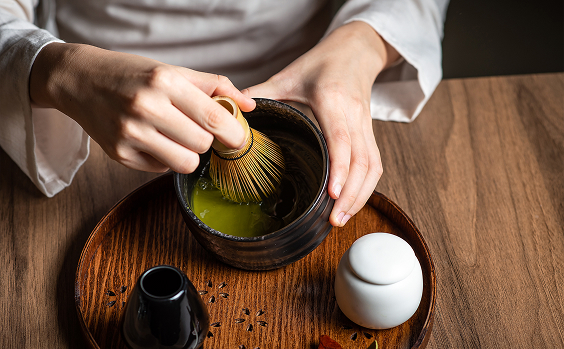

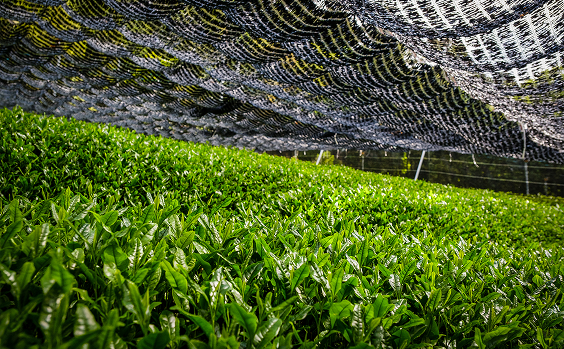
Cut UV. New leaves becomes light green and soft. Theanin ingredients increased. Not bitter taste, Good flavor, Umami.